So I'm reading the Hunger Games again, and this time, I'm going to deeply analyze it.
The setting of the novel has been made very clear. Katniss made sure to emphasize it as much as possible, as the setting is of utmost importance to the story of her misfortune. She lives in "Panem, the country that rose up out of the ashes of a place that was once called North America. He lists... the brutal war for what little sustenance remained. The result was Panem,ashining Capitol ringed by thirteen districts, which brought peace abd proseperity to its citizens. Then came the Dark Days, the uprising of the districts against the Capitol. Twelve were defeated, the thirteenth obliterated. The Treaty of Treason gave us the new laws to guarantee peace and, as our yearly reminder that the Dark Days must never be repeated, it gave us the Hunger Games" (Collins 18). As you can clearly see, Katniss elaborates with great sarcasm about the current predicament of her district. Which I would have no problem with, if she would just stop waving her misfortune around in your face.
Katniss should be a character that I sympathize with. And I've tried to be sympathetic. I really have. But there's something about her that really just makes it really hard to feel bad for this girl. Maybe it's because of the way she whines about the unfairness of the Capitol all the time. Which is fine, the first few times, but after the tenth time, it gets pretty old. Like, I get it. Your life sucks. But so does everyone else's, but you dont see them moping around all the time. And also, just the convenience of Katniss's predicament. She just happens to be lucky enough to have the guts to volunteer for her sister, the experience in the woods that just happens to coincide with the arena that year, and Peeta the adorable bread boy in love with her. Speaking of which, she barely makes an effort to even hide her disdain for the lovesick buffoon.
The Hunger Games is a good book, with a good plot and an interesting setting. Just the main character is unfortunate, depressing, and whiny, and I really wish that Suzanne Collins ight have written from the perspective of a different person.
Tuesday, May 27, 2014

Sunday, May 18, 2014
Character: Sick
This week, I read the book Sick. It's about a bacterial infection that takes place in Phoenix, Arizona, and the resulting events are similar to those of a zombie apocalypse. The story focuses on a group of high school students who are trapped in the performing arts wing of the school during the epidemic.
The character that seemed the most interesting to me was Chad, the narrator's best friend. In the beginning of the book, during the early stages of the epidemic, Chad is belligerent and sometimes rude, often openly insulting people and starting fights. However, as time passes, he begins to cooperate and understand the importance of working as a team and preserving lives. In fact, at one point, he says to Brian, "Cripple... or kill. As one of the soon-to-be freak shows out there, I'm votin' for the cripple. There might be a cure somewhere out there, and we gotta give those bastards a chance at it, including yours truly, if you don't mind" (Leveen 216). This quote shows that at this point in the book, Chad is trying to preserve lives and hope for a cure.
Even though in the end (spoiler alert), Chad turns into one of the zombies, while the story progressed, he was beginning to show a kinder and more humanitarian side.
The character that seemed the most interesting to me was Chad, the narrator's best friend. In the beginning of the book, during the early stages of the epidemic, Chad is belligerent and sometimes rude, often openly insulting people and starting fights. However, as time passes, he begins to cooperate and understand the importance of working as a team and preserving lives. In fact, at one point, he says to Brian, "Cripple... or kill. As one of the soon-to-be freak shows out there, I'm votin' for the cripple. There might be a cure somewhere out there, and we gotta give those bastards a chance at it, including yours truly, if you don't mind" (Leveen 216). This quote shows that at this point in the book, Chad is trying to preserve lives and hope for a cure.
Even though in the end (spoiler alert), Chad turns into one of the zombies, while the story progressed, he was beginning to show a kinder and more humanitarian side.
Monday, May 5, 2014
Review: Dance of Shadows
I'm sorry. I typically have good things to say about the books I read, but I can't say that I was impressed with this book at all.
This book is about a girl named Vanessa, who, after the disappearance of her sister Margaret, enrolls at the New York Ballet Academy (the location of Margaret's disappearance), to try and find her sister. There, she notices freaky events that seems to coincide with the strange disappearance of her sister. After a while, she becomes aware of the strange cult that she is involved in, and decides to do the heroic thing be trying to stop the shenanigans.
First of all, this theme has reoccurred way too often in way too many books. About half of young adult books today involve some sort of weird cult or demon activity or supernatural haunting (the other half is sci-fi/dystopia/utopia). They all go like this: the main character gets dumped into a new and unfamiliar setting, immediately senses something strange that no one else seems to notice, except of course for the one hot guy or girl that eventually becomes their love interest. The two team up, somehow overpower whatever freaky being(s) is bothering them, and skip off into the sunset, regardless of how many books it takes to fulfill this plot. It gets old pretty quickly.
Secondly, the main character wasn't relatable at all. Vanessa is supposedly an attractive girl (who somehow manages to grab the attention of the hottest guy in school with doing anything), and when she danced, "she seemed to float with an ethereal lightness, her feet tiptoeing across the stage as she transformed herself into a white swan, a sleeping princess, or a Sugar Plum Fairy, her shock of red hair flashing beneath the lights like electricity" (Black 10). Vanessa is immediately cast as the lead role of The Firebird, a particularly challenging ballet, only weeks after she first joins the academy. Vanessa is described as a perfect dancer, and dances with very little effort. The parts that she transformed into, in the quotes above, are all lead parts that the best dancers dance. Please. The girl is fifteen years old. This isn't a heroine that many people can relate to, and are more likely to feel skeptical and isolated rather than sympathetic, which brings me to my next point.
I may be biased about this, but it is my belief that if you are going to write a book about ballet, or any activity for that matter, it is in everyone's best interest that you put some research into it. It benefits the people because the dancers can relate, and everyone else can learn something new. It benefits the author because you sound more credible, and less like a pretentious idiot. Like I had previously stated, most girls do not have flawless technique and land all of the lead parts while a freshman in high school. And also, there is more to ballet terminology than "spreading her arms by her sides" and "lofting herself onto her toes".
However, I have to admit that the writing craft is very good. Had the author chosen a different main character and done some research, the story might have been more successful and engaging. However, every person's opinion is different, and I guess you would have to make an opinion for yourself.
This book is about a girl named Vanessa, who, after the disappearance of her sister Margaret, enrolls at the New York Ballet Academy (the location of Margaret's disappearance), to try and find her sister. There, she notices freaky events that seems to coincide with the strange disappearance of her sister. After a while, she becomes aware of the strange cult that she is involved in, and decides to do the heroic thing be trying to stop the shenanigans.
First of all, this theme has reoccurred way too often in way too many books. About half of young adult books today involve some sort of weird cult or demon activity or supernatural haunting (the other half is sci-fi/dystopia/utopia). They all go like this: the main character gets dumped into a new and unfamiliar setting, immediately senses something strange that no one else seems to notice, except of course for the one hot guy or girl that eventually becomes their love interest. The two team up, somehow overpower whatever freaky being(s) is bothering them, and skip off into the sunset, regardless of how many books it takes to fulfill this plot. It gets old pretty quickly.
Secondly, the main character wasn't relatable at all. Vanessa is supposedly an attractive girl (who somehow manages to grab the attention of the hottest guy in school with doing anything), and when she danced, "she seemed to float with an ethereal lightness, her feet tiptoeing across the stage as she transformed herself into a white swan, a sleeping princess, or a Sugar Plum Fairy, her shock of red hair flashing beneath the lights like electricity" (Black 10). Vanessa is immediately cast as the lead role of The Firebird, a particularly challenging ballet, only weeks after she first joins the academy. Vanessa is described as a perfect dancer, and dances with very little effort. The parts that she transformed into, in the quotes above, are all lead parts that the best dancers dance. Please. The girl is fifteen years old. This isn't a heroine that many people can relate to, and are more likely to feel skeptical and isolated rather than sympathetic, which brings me to my next point.
I may be biased about this, but it is my belief that if you are going to write a book about ballet, or any activity for that matter, it is in everyone's best interest that you put some research into it. It benefits the people because the dancers can relate, and everyone else can learn something new. It benefits the author because you sound more credible, and less like a pretentious idiot. Like I had previously stated, most girls do not have flawless technique and land all of the lead parts while a freshman in high school. And also, there is more to ballet terminology than "spreading her arms by her sides" and "lofting herself onto her toes".
However, I have to admit that the writing craft is very good. Had the author chosen a different main character and done some research, the story might have been more successful and engaging. However, every person's opinion is different, and I guess you would have to make an opinion for yourself.
Sunday, April 27, 2014
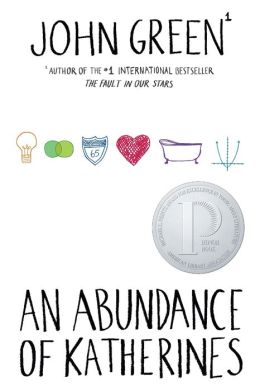
Review: An Abundance of Katherines
I just finished reading the book An Abundance of Katherines. It was about Colin Singleton, a child prodigy who learned to read after age two. He had dated nineteen girls in his lifetime, all named Katherine and all had dumped him. He had just been dumped by Katherine XIX, and was a pathetic heartbroken mess, lying on his bedroom floor. His best (and only) friend Hassan decided to intervene and take him on a road trip. After several days, however, they stop in Gutshot, Tennessee, to visit the grave of Archduke Franz Ferdinand, and decide to stay in Gutshot for a while. They meet Lindsey Lee Wells, the daughter of a woman who owns a tampon string factory. In Gutshot, Colin and Hassan work for Hollis, the factory owner, and soon develop a bond with Linsey and her friends.
I was fairly impressed with this book. The way that it was written really shows the author's voice, and you can hear the sarcasm, or humor, or whatever emotion that John Green is trying to portray in this book. This can be shown even in the footnotes, "Like a smart monkey, Colin possessed an extensive vocabulary, but very little grammar. Also, he didn't know dead was pronounced ded. Forgive him. He was two." (Green 17).
I really enjoyed this book, and I think you would too, if you enjoyed humor and have a high tolerance for anagrams and ridiculously long math formulas (which I don't, but everything else was good). I would give it a solid 9/10.

I was fairly impressed with this book. The way that it was written really shows the author's voice, and you can hear the sarcasm, or humor, or whatever emotion that John Green is trying to portray in this book. This can be shown even in the footnotes, "Like a smart monkey, Colin possessed an extensive vocabulary, but very little grammar. Also, he didn't know dead was pronounced ded. Forgive him. He was two." (Green 17).
I really enjoyed this book, and I think you would too, if you enjoyed humor and have a high tolerance for anagrams and ridiculously long math formulas (which I don't, but everything else was good). I would give it a solid 9/10.
Tuesday, April 22, 2014
Krista Ramsey Column: "Locking Into the Magic of Legos"
This column article is about the strange infatuation that kids have with Legos, even today, when video games and electronic devices are more popular.
Hyperlink: http://www.cincinnati.com/story/opinion/columnists/krista-ramsey/2014/02/15/krista-locking-into-the-magic-of-legos/5521245/
"The first time a kid constructs a new set, he'll sit on the floor, contents before him, and pore over the instruction booklet spread out before him" (Ramsey). This line is very well-written because it describes the concentration that a small child has when playing with Legos. The diction and syntax in this line implies that the child is completely focused and immersed in the toy, and builds the blocks with determination, as he "pores over the instruction booklet spread out before him."
Ramsey's writing style seems to be trying to relate to something that we have all observed before, whether it is a teenager hunched over a phone, people dressing more casually than is appropriate, or a small child playing with Legos, it is an image that most people are accustomed to seeing, and will help the people understand the article better. For example, in her article about cell phones and eyesight: "You see it all the time. Your teenager at the dinner table, waiting for his checkup at the orthodontist’s office, sauntering to his car – continually hunched over his smartphone or iPad" (Ramsey). Ramsey purposefully puts the familiar image in our heads to make her article more relatable. Or, in her article about dressing up: "It’s a hopeful sign in a nation that now accepts flip-flops and jeans as appropriate wear for weddings, graduations, awards banquets and funerals. At work, “Casual Fridays” have morphed into sundresses and golf shirts every day. And almost no one dresses up any more for things that were once considered something of an event – dinner at a nice restaurant, religious services, plane flights" (Ramsey). Most people have seen someone, or have been guilty of dressing way too casually for any sort of event, and the author puts that image in our minds to make her point. This can also be seen in her article about Legos: "Then feet will pad up the basement stairs to show parents what's been created. And they'll pad right back down to tear it apart and move on to freestyle" (Ramsey). Many people are familiar with the way that small children play with Legos, and the processes the go through when recieving a new set. This serves as proof that Legos, at this time period, are still very popular.
If I were to meet Krista Ramsey, I would ask her these three questions: Have you always wanted to be a writer? Are there any components of an article that you always include? How was your high school experience?
Hyperlink: http://www.cincinnati.com/story/opinion/columnists/krista-ramsey/2014/02/15/krista-locking-into-the-magic-of-legos/5521245/
"The first time a kid constructs a new set, he'll sit on the floor, contents before him, and pore over the instruction booklet spread out before him" (Ramsey). This line is very well-written because it describes the concentration that a small child has when playing with Legos. The diction and syntax in this line implies that the child is completely focused and immersed in the toy, and builds the blocks with determination, as he "pores over the instruction booklet spread out before him."
Ramsey's writing style seems to be trying to relate to something that we have all observed before, whether it is a teenager hunched over a phone, people dressing more casually than is appropriate, or a small child playing with Legos, it is an image that most people are accustomed to seeing, and will help the people understand the article better. For example, in her article about cell phones and eyesight: "You see it all the time. Your teenager at the dinner table, waiting for his checkup at the orthodontist’s office, sauntering to his car – continually hunched over his smartphone or iPad" (Ramsey). Ramsey purposefully puts the familiar image in our heads to make her article more relatable. Or, in her article about dressing up: "It’s a hopeful sign in a nation that now accepts flip-flops and jeans as appropriate wear for weddings, graduations, awards banquets and funerals. At work, “Casual Fridays” have morphed into sundresses and golf shirts every day. And almost no one dresses up any more for things that were once considered something of an event – dinner at a nice restaurant, religious services, plane flights" (Ramsey). Most people have seen someone, or have been guilty of dressing way too casually for any sort of event, and the author puts that image in our minds to make her point. This can also be seen in her article about Legos: "Then feet will pad up the basement stairs to show parents what's been created. And they'll pad right back down to tear it apart and move on to freestyle" (Ramsey). Many people are familiar with the way that small children play with Legos, and the processes the go through when recieving a new set. This serves as proof that Legos, at this time period, are still very popular.
If I were to meet Krista Ramsey, I would ask her these three questions: Have you always wanted to be a writer? Are there any components of an article that you always include? How was your high school experience?
Tuesday, April 15, 2014
Characters: An Abundance of Katherines
An Abundance of Katherines, by John Green, is about a guy named Colin Singleton, who had dated nineteen Katherines and had just been dumped by Katherine XIX. He is a supposed genius, who learned to read when he was two years old and enjoys making anagrams out of sentences, phrases, and words.
I haven't gotten very far in the book, but so far, Colin seems to be aware of his own genius, however, his parents made him stay in "normal school", so he wouldn' become so socially incompetent, such as, say, Sheldon Cooper of The Big Bang Theory. But, unfortunately for him, he was bullied relentlessly, because he had different iterests from his classmates.
Regardless of however many years he spent in school, Colin still seems to be oblivious of the supposed social borderlines and limits on what he can and cannot say. He doesn't seem to be particularly interested in making friends, either, because as of page 23, he had clearly stated that he was only interested in people named Katherine, his parents, and his best friend Hassan. "But they never spoke, because Colin had given up on pursuing inividuals not named Katherine. He hated almost all of the students at Kalman, which was just as well, since by and large they hated him back" (Green 23).
Hopefully, as the book progresses, Colin will begin to come out of his shell and develop awareness for the people and experiemces around him.
I haven't gotten very far in the book, but so far, Colin seems to be aware of his own genius, however, his parents made him stay in "normal school", so he wouldn' become so socially incompetent, such as, say, Sheldon Cooper of The Big Bang Theory. But, unfortunately for him, he was bullied relentlessly, because he had different iterests from his classmates.
Regardless of however many years he spent in school, Colin still seems to be oblivious of the supposed social borderlines and limits on what he can and cannot say. He doesn't seem to be particularly interested in making friends, either, because as of page 23, he had clearly stated that he was only interested in people named Katherine, his parents, and his best friend Hassan. "But they never spoke, because Colin had given up on pursuing inividuals not named Katherine. He hated almost all of the students at Kalman, which was just as well, since by and large they hated him back" (Green 23).
Hopefully, as the book progresses, Colin will begin to come out of his shell and develop awareness for the people and experiemces around him.
Tuesday, March 18, 2014
Setting: Unpolished Gem
This book, a memoir of an Asian-Australian lawyer and writer, is about her childhood in the suburbs of Melbourne, Australia. The author, Alice Pung, was born in 1981 a month after her parents arrive from a refugee camp in Thailand.
She begins her story a few weeks before she is born, when her parents and grandmother arrive in Melbourne in 1981 with an empty suitcase. Alice vividly describes her family's wonder at the perfection of Australia, compared to the terror and poverty of Cambodia, where the dictator Pol Pot had recently ruled. "It is a country where no one walks like they have to hide. From the top floor of the Rialto building my parents see that the people below amble in a different manner, and not just because of the heat. No bomb is ever going to fall on them. No one pissing in the street, except of course in a few select suburbs. No lepers. No Khmer Rouge-type soldiers dressed like black ants prodding occupants of the Central Business District into making a mass exodus to Wangaratta" (Pung, 9).
Alice also describes her immigrant family's fascination with the wealth of the new country, where anything could be bought and made useful. "Baskets for two dollars, colourful pink and red ones, in which to wash the lettuce. Plastic neon-yellow chopstick-holding baskets, plastic racks, plastic bedside tables for thirty dollars each to be assembled at home. Bright prints of Vietnam scenery on shaped plastic to hang on the walls of your house. Colourful floor mats with little animals printed on them. And squeaking sandals for the children, sandals at every corner of the house, so guests do not need to walk around in bare feet" (Pung, 17).
This book, although I haven't gotten very far, seems to be full of good imagery and description. Every sentence reveals a new detail about her childhood, creating colorful scenes in our minds and leaving no questions about her family's first few years in Melbourne.
Subscribe to:
Comments (Atom)